






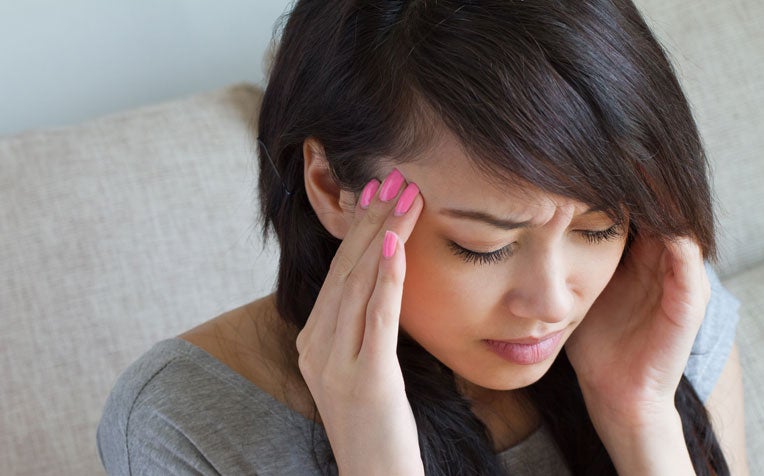
Migraines can be trigged by stress, irregular meals, and lack of sleep.
Everyone gets a headache from time to time. For most, it is an infrequent annoyance that comes and goes. For some people, the headache is a full-blown migraine attack, complete with nausea and vomiting. When are your headache symptoms a serious cause of worry? And can headaches and migraines be prevented?
The Department of Neurology from National Neuroscience Institute (NNI), a member of the SingHealth group, tackles these and other questions head-on.
Primary vs secondary headaches
Headaches can be classified as either primary or secondary depending on their origin:
Primary headaches
These are headaches that occur independently and are not symptoms of another disease. They include:
- Migraine (which refer to headaches with no underlying worrisome cause)
- Tension-type headache (which affect up to 90 per cent of adults in their lifetime)
- Cluster headache (a rare type of headache that affects mainly men in their late 20s)
- New daily persistent headache
They are often associated with:
- Overactivity of pain-sensitive structures in the head
- Sleep disturbances
- Stress and emotional factors
- Hormonal changes
- Dietary and environmental triggers
Secondary headaches
Secondary headaches, on the other hand, stem from an underlying brain disorder. They could be due to a brain infection, abnormal intracranial pressure, bleeding, stroke or brain tumour. These are often related to other medical conditions such as:
- Infections (e.g., sinusitis, meningitis)
- Head injuries
- Medication overuse
- Eye strain
- Brain tumours
- High blood pressure
- Stroke or other vascular conditions
Secondary headaches, on the other hand, stem from an underlying brain disorder. They could be due to a brain infection, abnormal intracranial pressure, bleeding, stroke or brain tumour.
“Based on your medical history and physical examination, your doctor should be able to advise if your headache is likely to be primary or secondary, and if further tests are required,” shares the NNI Department of Neurology.
What are the characteristics of a migraine?
Symptoms associated with a migraine include:
- Moderate to severe throbbing pain, usually on one side
- Worsens with physical activity
- Nausea and/or vomiting
- Sensitivity to light, sound or smells
- May be preceded by aura (flashing lights, zigzag lines, visual disturbances)
- Tingling or numbness in limbs in some cases
“Apart from more severe pain, a migraine is usually associated with nausea and vomiting, as well as sensitivity to light, smell and sound,” explains doctors from the NNI Department of Neurology.
In addition, about a third of patients with migraine have warning signs called aura, which precede the pain. For example the patient may see zigzag lines or flashing lights (visual warning signs) or experience a tingling or numbness in the limbs (sensory symptoms).
Migraine pain also tends to be on one side of the head. The pulsating or throbbing pain is typically of moderate to severe intensity. Physical activities will tend to worsen the migraine.
There are many types of migraine. The most common is the migraine without aura (visual or sensory disturbance before your headache begins), followed by those with aura. Many other subtypes exist, depending on the type of aura, as well as the duration and frequency of attacks.
What are the common causes of migraine?
Like most primary headaches, a migraine tends to have a genetic basis, meaning it runs in the family. If you suffer from migraine headaches, you probably have family members that are sensitive to the same migraine triggers as you.
These triggers can include:
- Environment – weather, light, smell and sound
- Lifestyle – poor sleep, stress and irregular meals
- Diet – certain foods and drinks including coffee, cheese and alcohol
- Emotional and hormonal factors
If a certain trigger is known to cause your migraine, avoidance of this trigger is naturally recommended. An effective way of identifying such triggers is to keep a headache diary.
How are migraines treated?
There are two main approaches when it comes to migraine and other primary headaches:
- Symptomatic treatment – This helps to relieve the pain symptoms. Non-steroidal anti-inflammatory drugs (NSAIDs) are usually the treatment of choice. Other treatment options include triptans, which are specific anti-migraine drugs. However, these medications should not be used more than twice a week to avoid medication overuse.
- Prophylactic treatment – Prophylactic or preventive therapy aims to reduce the overall frequency of attacks and is usually reserved for those whose migraine attacks are frequent and severe enough to affect their daily life. Medication is usually taken daily for at least 4 to 6 months or until the symptoms are better controlled.
The use of Botox has also been found to reduce the frequency of headaches in chronic migraine cases.
What can I do to prevent migraines?
While some headaches are unpredictable, many can be prevented with lifestyle strategies and trigger management.
The following strategies may help reduce headache frequency:
- Maintaining regular sleep and meal schedules
- Staying well hydrated throughout the day
- Limiting intake of caffeine and alcohol
- Managing stress through relaxation techniques, meditation or counselling
- Exercising regularly, but avoiding overexertion
- Monitoring for triggers using a headache diary
Women who experience menstrual or hormonal migraines may benefit from medical review to discuss preventive options.
When to see a doctor for headaches?
Seek medical attention if you experience
- Frequent headaches occurring more than once a week
- A reliance on painkillers for more than once a week
- A significant change in the pattern of a usual headache
- Headaches that do not respond to usual medications
- Headache with fever, stiff neck, confusion or visual disturbances
- New or worsening headaches after age 50
- Headache following a head injury
- Headaches that wake you from sleep or worsen on coughing or exertion
- A sudden, severe headache
- New headache in individuals with cancer, HIV or autoimmune diseases
Ref: F26 (ed)
Related articles:
Headaches: Causes and Types
Primary vs Secondary Headaches


Stay Healthy the Easy Way
Get trusted health advice, offers and more.

Get the Health Buddy App


Follow HealthXchange

