





1. N95 masks are recommended when PSI levels exceed 300 and prolonged outdoor exposure is unavoidable. Wearing an N95 mask is not necessary when indoors or during brief outdoor exposure, such as walking from the bus stop to a nearby building.
People with chronic lung or heart diseases, elderly, and pregnant women should wear an N95 mask when PSI levels exceed 200, if they need to be outdoors for long periods.
2. People with respiratory conditions and heart disease, as well as the elderly, young children and pregnant women, should avoid going outdoors whilst the haze persists in Singapore.
3. Use an air purifier with a HEPA filter at home, drink more water than usual and eat more vegetables and fruits to boost your immune system.
4. When the 1-hour PM2.5 hits elevated levels (56 µg/m³ and above), healthy persons should reduce strenuous outdoor physical exertion for the next hour. For vulnerable persons, it should be avoided.
For the 24-hour PSI, when readings hit above 100, healthy persons should reduce strenuous outdoor physical exertion. Elderly, pregnant women and children should minimise strenuous outdoor physical exertion. For persons with chronic lung disease and heart disease, it should be avoided.
For detailed advice, read more below.
5. See a doctor if you experience:
- Wheezing or a whistling sound when you breathe
- Shortness of breath during light activity or at rest
- Chest tightness or a feeling of pressure in the chest
- Eye redness, pain, or discharge that does not improve despite staying indoors or after rinsing with water
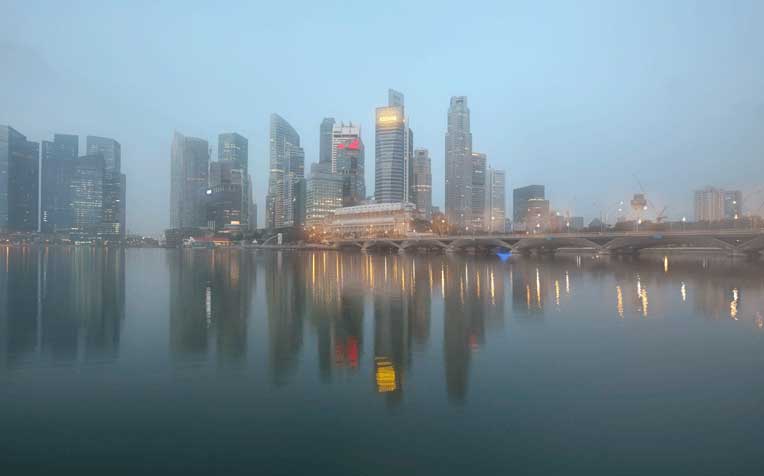
Haze in Singapore is an annual occurrence that typically occurs during May to October, as a result of raging forest fires in neighbouring Sumatra, Indonesia.
| For the latest 1-hour PM2.5 and 24-hour PSI readings, visit the National Environment Agency (NEA) website at www.nea.gov.sg. |
Why you need to protect yourself from the haze
The danger of haze lies in the fine particulate matter it contains, known as PM2.5 — particles so small (2.5 micrometres or less in diameter) that they can bypass the nose and throat and penetrate deep into the lungs and bloodstream. Prolonged exposure to high PM2.5 levels has been linked to:
- Respiratory illnesses,
- Cardiovascular disease, and
- Worsening pre-existing conditions such as asthma and chronic obstructive pulmonary disease (COPD)
“Existing health conditions such as eczema, asthma, COPD and eye diseases like conjunctivitis are made worse by air pollution,” says Associate Professor Loo Chian Min, Senior Consultant and Chairman of Medical Board from the Department of Respiratory and Critical Care Medicine, Singapore General Hospital (SGH), a member of the SingHealth group.
8 Ways to protect yourself from the haze
You can take the following steps to protect yourself from the haze:
1. Stay indoors as much as possible
When PSI levels are in the unhealthy range (above 100), limit your time outdoors, especially during peak haze periods. Keep windows and doors closed when PSI levels rise to prevent haze from entering your home.
2. Take precautions when outdoors for prolonged periods
N95 masks are generally recommended when PSI hits hazardous levels exceeding 300 and prolonged outdoor exposure is unavoidable.
For air quality that is in the unhealthy (101-200) and very unhealthy (201-300) range, cover your nose and mouth when outdoors for prolonged periods. If driving, keep the windows of your car closed.
3. When indoors, keep windows and doors closed
When indoors, close doors and windows when outdoor air quality appears to be worsening. This reduces the amount of PM2.5 particles entering your home.
Fans and air-con help to keep your indoor environment comfortable. However, standard air-conditioners do not filter out PM2.5 particles.
4. Use an air purifier at home
Use an air purifier with a HEPA filter at home to reduce indoor PM2.5 levels. Ensure the purifier is adequately sized for the room it is placed in.
5. Hydrate more than usual
Drink more water than usual. This helps to keep your respiratory tract moist and helps the kidneys to flush out any toxins absorbed through the skin and lungs.
Cut down on coffee and alcohol as these promote fluid loss and remove nutrients from the body.
6. Strengthen your immunity
Build up your immunity with foods rich in vitamin C (oranges, guava, strawberries), vitamin E (nuts and seeds) and omega-3 fatty acids (oily fish). This will boost your immune system and reduce the irritant effects of the haze.
7. Reduce strenuous outdoor activity when air quality worsens
Physical exertion increases your breathing rate, causing you to inhale more pollutants when exercising outdoors. Instead, switch to exercising indoors when PSI levels hit the unhealthy range and worse.
8. Monitor your health
Watch for symptoms such as eye irritation, a runny nose, sore throat, coughing, or difficulty breathing. Seek medical attention promptly if symptoms worsen.
Additional precautions for vulnerable groups
Certain groups are at higher risk of health complications during haze and should take extra precautions.
- People with asthma or respiratory conditions should ensure they always have their reliever inhalers on hand.
- If symptoms worsen — such as more frequent use of a reliever inhaler, increased breathlessness, or chest tightness — consult your doctor promptly. Do not wait until symptoms become severe.
- Persons with heart disease may experience worsening symptoms during haze, as PM2.5 particles can enter the bloodstream and affect cardiovascular function. Seek medical attention if you experience chest pain, palpitations or unusual shortness of breath.
- Elderly individuals have reduced respiratory reserve and immune function, making them more susceptible to the effects of haze. They should stay indoors and avoid unnecessary outdoor trips.
- Children tend to breathe faster than adults and are therefore exposed to proportionally more pollutants. Keep children indoors during haze and avoid outdoor play or sports activities.
- Pregnant women should be particularly cautious, as exposure to high PM2.5 levels can harm both maternal health and fetal development. Stay indoors, use air purifiers, and consult your doctor if you have concerns.
“Even healthy people can suffer from irritation in the eyes, nose and throat, coughing and sneezing, if they spend time outdoors during a smoke haze,” said Prof Loo.
When to wear an N95 mask for the haze?
Surgical masks are not effective against haze particles and do not provide adequate protection.
An N95 mask is generally recommended when PSI levels exceed 300 and prolonged outdoor exposure is unavoidable. For best effect, an N95 mask needs to be fitted properly for the user. An N95 mask can be reused but not shared. However, it should be changed when soiled or distorted.
There is no need to wear an N95 mask indoors or during brief outdoor exposure, such as walking from the bus stop to a nearby building.
Persons with chronic lung or heart disease, the elderly and pregnant women can consider wearing an N95 mask even at lower PSI levels (e.g. 200), if they need to go outdoors for longer periods.
Children should not use N95 masks, as they are not certified for them. It is safer for children to remain indoors during periods of high PSI.
| If you are | Wear an N95 mask |
|---|---|
| A healthy adult | When you need to be outdoors for several hours and the PSI is exceeds 300 (in the hazardous range). |
| Elderly, pregnant or have chronic lung or heart disease | When you need to be outdoors for several hours and the PSI is above 200 (in the very unhealthy range). |
Learn how to wear an N95 mask correctly to protect yourself from the haze.
Watch this video!
When to see a doctor for haze symptoms?
You should seek medical attention if you experience:
- A persistent cough that does not improve after moving indoors or taking over-the-counter medication
- Wheezing or a whistling sound when you breathe
- Shortness of breath during light activity or at rest
- Chest tightness or a feeling of pressure in the chest
- Eye redness, pain, or discharge that does not improve despite staying indoors or after rinsing with water
- A sore throat or nasal congestion that worsens over several days
- Fever alongside respiratory symptoms, suggesting an infection instead of mild irritation
How does the haze affect your health?
The impact of haze on a person’s health depends on various factors such as overall health status, PSI levels, how long a person remains outdoors and the intensity of the outdoor physical activity.
For healthy individuals, short-term exposure to haze can cause:
- Dry or sore throat
- Coughing and sneezing
- Runny nose
- Eye irritation or tearing
- Skin irritation or eczema flare-ups
There may be 1 to 3 days of lag time between exposure to haze and symptoms. However, these symptoms are usually mild and will resolve on their own once exposure to the haze is reduced.
PSI or PM2.5, which reading to use?
Use 1-Hour PM2.5 readings to plan for immediate outdoor activities
| For Healthy Persons | For Vulnerable Persons (Elderly, pregnant women, children and persons with chronic lung disease or heart disease) |
|
|---|---|---|
| Band 1 (Normal)(0 – 55 µg/m3) | Continue with normal activities | |
| Band 2 (Elevated) (56 – 150 µg/m3) |
Reduce strenuous outdoor activity for the next hour | Avoid strenuous outdoor activity for the next hour |
| Band 3 (High) (151 – 250 µg/m3) |
Reduce strenuous outdoor activity for the next hour | Avoid strenuous outdoor activity for the next hour |
| Band 4 (Very High) (>=251 µg/m3) |
Minimise all outdoor activity for the next hour | Avoid all outdoor activity for the next hour |
Use 24-Hour PSI to plan for next day’s outdoor activities
| For Healthy Persons | For Elderly, Pregnant Women and Children | For Persons with Chronic Lung Disease or Heart Disease | |
|---|---|---|---|
| Good Air Quality (0 – 50) |
Continue with normal activities | ||
| Moderate Air Quality (51 – 100) |
Continue with normal activities | ||
| Unhealthy Air Quality (101 – 200) |
Reduce prolonged or strenuous outdoor physical exertion | Minimise prolonged or strenuous outdoor physical exertion | Avoid prolonged or strenuous outdoor physical exertion |
| Very Unhealthy Air Quality (201 – 300 |
Avoid prolonged or strenuous outdoor physical exertion | Minimise outdoor activity | Avoid outdoor activity |
| Hazardous Air Quality (> 300) |
Minimise outdoor activity | Avoid outdoor activity | Avoid outdoor activity |
What do PSI and PM2.5 in Singapore's air quality index mean?
Singapore uses two key measures to track air quality:
- The Pollutant Standards Index (PSI) measures several air pollutants including sulphur dioxide, nitrogen dioxide, carbon monoxide, ozone, and fine particles. It gives a general picture of overall air quality.
- The 1-hour PM2.5 reading is considered the more relevant indicator during haze episodes, as it specifically measures the fine particles 2.5 micrometres or smaller that are most harmful to health.
FAQs
1. What are the symptoms of being affected by haze?
For healthy individuals, short-term exposure to the haze in Singapore (over a period of a few hours to a few days) will generally not cause any major health issues, other than irritation of the eyes, nose, throat and skin. This should resolve in a few days but do see a doctor if symptoms persist.
2. When do I need to wear an N95 mask during haze?
N95 masks are generally recommended when PSI levels exceed 300 and prolonged outdoor exposure is unavoidable. For short periods outdoors when PSI levels are moderate, most healthy individuals do not require a mask.
However, people with chronic lung or heart diseases, the elderly, and pregnant women can consider wearing an N95 mask even at lower PSI levels (e.g. 200) if they are outdoors for longer periods.
3. What should I do to stay healthy during haze?
Use an air purifier with a HEPA filter at home, drink more water than usual and eat more vegetables and fruits to boost your immune system.
4. Does aircon help with haze?
Air conditioners make your living environment more comfortable, however most standard air conditioners are not equipped with HEPA filters to remove fine particulate matter (PM2.5). If you do use the air conditioner during the haze period, clean your aircon filters more frequently.
Although the haze in Singapore affects everyone, people with asthma and other respiratory conditions, older adults, pregnant women, young children and those with heart or lung disease are more vulnerable.
During periods of elevated PM2.5 readings (56 µg/m3 and above) and unhealthy air quality (PSI 101 and above), limit prolonged or strenuous outdoor activities and keep windows and doors closed when necessary. An air purifier with a HEPA filter can also help improve indoor air quality.
If outdoor exposure cannot be avoided during hazardous air quality (PSI > 300), use an appropriately fitted N95 mask.
Be alert for haze symptoms such as coughing, sore throat, runny nose, eye irritation, wheezing, chest tightness or difficulty breathing. If symptoms worsen or do not improve, seek medical attention promptly.
Ref: F26 (ed)
Related articles:
How to Protect Your Child from the Haze
Contributed by


Related Articles

---risk-factors,-treatment-and-breathing-techniques/Thumbnail%20copd.png)


Stay Healthy the Easy Way
Get trusted health advice, offers and more.

Follow HealthXchange

