






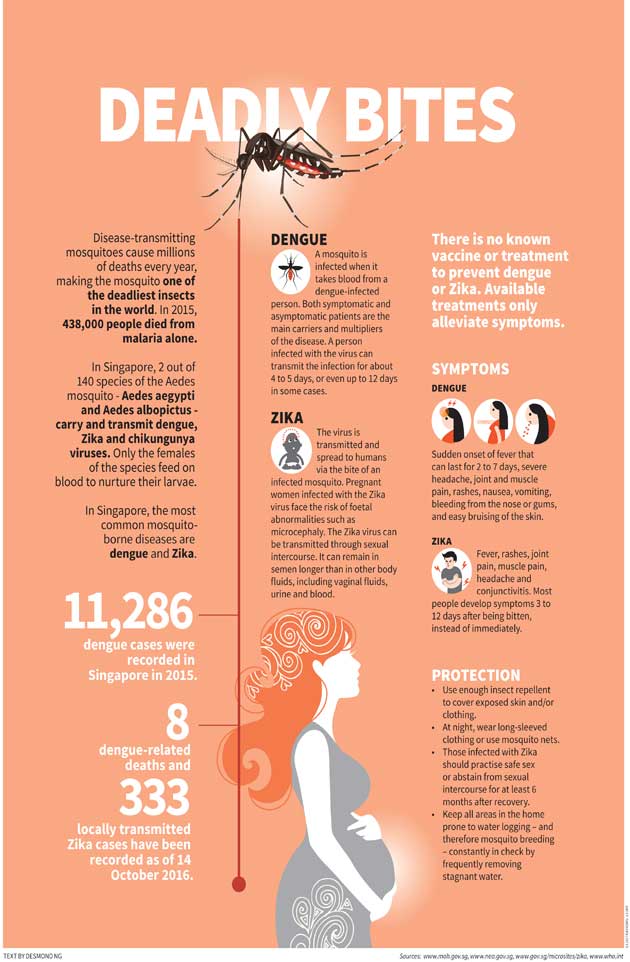
Zika virus is transmitted and spread to humans via the bite of an infected mosquito.
Disease-transmitting mosquitoes cause million of deaths every year, making the mosquito one of the deadliest insects in the world. In 2015, 438,000 people died from malaria alone.
Dengue and Zika stats in Singapore:
- In Singapore, 2 out of 140 species of the Aedes mosquito - Aedes aegypti and Aedes albopictus - carry and transmit dengue, Zika and chikungunya viruses. Only the females of the species feed on blood to nurture their larvae.
- In Singapore, the most common mosquito-borne diseases are dengue and Zika.
- 11,286 dengue cases were recorded in Singapore in 2015.
- 8 dengue-related deaths and 333 locally transmitted Zika cases have been recorded as of 14 October 2016.
Dengue:
A mosquito is infected when it takes blood from a dengue-infected person. Both symptomatic and asymptomatic patients are the main carriers and multipliers of this disease. A person infected with the virus can transmit the infection for about 4 to 5 days, or even up to 12 days in some cases.
Zika:
The virus is transmitted and spread to humans via the bite of an infected mosquito. Pregnant women infected with the Zika virus face the risk of foetal abnormalities such as microcephaly. The Zika virus can be transmitted through sexual intercourse. It can remain in semen longer than in other body fluids including vaginal fluids, urine and blood.
Symptoms
Dengue:
Sudden onset of fever that can last for 2 to 7 days, severe headache, joint and muscle pain, rashes, nausea, vomiting, bleeding from the nose or gums, and easy bruising of the skin.
Zika:
Fever, rashes, joint paint, muscle pain, headache, and conjuctivitis. Most people develop symptoms 3 to 12 days after being bitten, instead of immediately.
Is there a vaccine for Zika?
There is no known vaccine or treatment to prevent dengue or Zika. Availble treatments only alleviate symptoms.
4 protection tips:
- Use enough insect repellent to cover exposed skin and/or clothing.
- At night, wear long-sleeved clothing or use mosquito nets.
- Those infected with Zika should practise safe sex or abstain from sexual intercourse for at least 6 months after recovery.
- Keep all areas in the home prone to water logging - and therefore mosquito breeding - constantly in check by frequently removing stagnant water.
Ref: O17


Stay Healthy the Easy Way
Get trusted health advice, offers and more.

Follow HealthXchange

