






1. To relieve muscle pain and support muscle recovery after exercise, you can:
- Use ice on the affected area if there is swelling. If there is no swelling, use a heat pack.
- Gently massage the affected area to help ease muscle tightness and soreness.
- Gently stretch after a workout.
- Do light exercises like walking, swimming and easy cycling.
- Gradually build up exercise intensity and avoid large sudden increases in exercise intensity and volume.
- Take a warm bath after a workout to loosen tight muscles and boost blood circulation for temporary relief.
2. Delayed onset muscle soreness (DOMS) usually begins 12 to 24 hours after a workout and subsides after 24 to 48 hours of rest.
3. DOMS usually affects a general area, reduces range of motion but gradually improves with rest. An injury, on the other hand, affects a specific area, worsens with motion, and continues to worsen over time, even with rest.
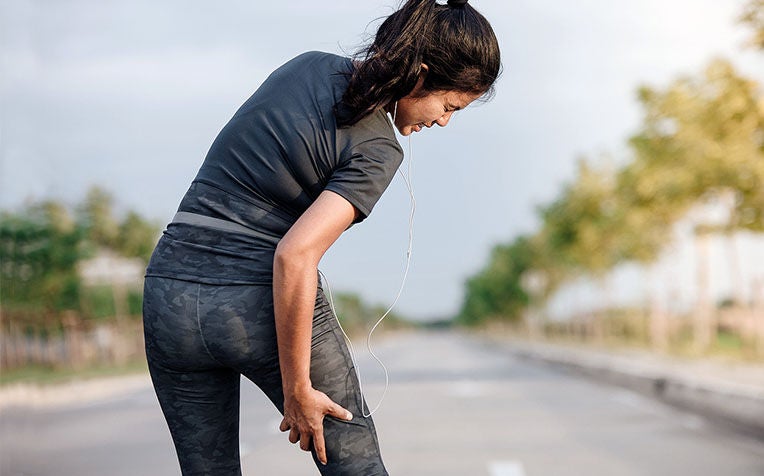
Muscle pain or sore muscles after exercise is known as delayed onset muscle soreness (DOMS).
Muscle soreness after exercise is common, particularly after unfamiliar physical activity, returning to exercise after a break, or increasing workout intensity.
This type of soreness, known as delayed onset muscle soreness (DOMS), typically develops after the activity rather than as sudden pain during exercise.
"If you haven't exercised for a while or if you are starting a new physical activity, you are likely to experience sore muscles after the workout. Your body is simply saying your muscles need time to recover," says Ms Cindy Ng Li Whye, Principal Physiotherapist from the Department of Physiotherapy and Lifestyle Enhancement & Fitness Improvement at Singapore General Hospital (SGH), a member of the SingHealth group.
Muscle pain after a workout of this kind is generally temporary and tends to improve as the body recovers. Read on for practical tips on how to manage and relieve muscle soreness after exercise.
What causes muscle pain after exercise?
During exercise, the muscles undergo small amounts of microscopic stress. When the demands on the muscles exceed what they are accustomed to, this can cause the characteristic soreness and stiffness associated with DOMS.
Certain types of movements are more likely to trigger muscle soreness after exercise, particularly those involving eccentric contractions.
An eccentric contraction occurs when a muscle lengthens while under tension. Common examples include lunges, walking or running downhill, and the landing phase of a jump, among others.
How to relieve muscle pain after exercise
Here are six practical ways on how to relieve muscle pain after exercise and support muscle recovery after workout:
1. Ice or heat
If there is noticeable swelling, warmth, or the pain may be related to an acute injury, wrap an ice pack in a thin towel and apply it to the area for about 15 minutes.
If the muscles are simply sore from exercise with no swelling, a heat pack may be applied for 15 minutes, as it may help increase blood flow to the area and provide temporary comfort.
Neither ice nor heat directly speeds up muscle repair, but both may provide temporary comfort depending on the situation.
2. Massage
A gentle massage may help ease muscle tightness and reduce feelings of soreness. A trigger-point or sports massage can be useful for particularly tight or uncomfortable areas.
Keep expectations practical. Massage may help manage discomfort but should not be expected to accelerate the healing process significantly.
3. Gentle stretching
Gentle stretching after a workout may help with feelings of tightness and support comfortable movement. While it may not fully prevent DOMS, it can be a useful part of a cool-down routine.
Avoid painful or aggressive stretching, particularly when muscles are already sore. If stretching causes significant discomfort, ease off and allow more recovery time.
4. Light exercise and active recovery
Gentle movement such as walking, easy cycling, swimming, or light mobility exercises may help manage discomfort and keep the body moving comfortably.
Activity should remain easy and comfortable, and it should not significantly worsen the pain or fatigue the muscles further.
5. Build up exercise intensity gradually
One of the most practical ways on how to reduce muscle soreness in future workouts is to progress gradually. Avoid large sudden increases in exercise intensity, resistance, or training volume.
When introducing new or unfamiliar exercises, particularly those involving eccentric movements such as downhill running or the lowering phase of a squat or bicep curl, increase the demands slowly to give the muscles time to adapt.
6. Warm bath
A warm bath for muscle recovery after a workout may loosen tight muscles and boost blood circulation, providing temporary relief.
What about topical creams?
"There is little evidence that liniments, oils and other typical over-the-counter sports creams have any effect beyond the massaging action," says Ms Cindy Ng Li Whye.
By making the skin feel cold or hot, they may distract the mind from soreness, but they are not necessary for recovery.
How long does muscle soreness last?
DOMS or delayed onset muscle soreness usually begins 12 to 24 hours after a workout, and the sore muscles that occur after a rigorous workout will usually subside after 24 to 48 hours of rest.
However, DOMS recovery time varies depending on the exercise, intensity, and individual.
But if the muscle aches do not go away after a few days of rest or even become more intense, it could be a sign that you have sustained a serious muscle injury.
Experiencing severe muscle pain during a workout may also be a sign that you have a muscle strain or muscle injury. If muscle pain is accompanied by breathing difficulty, high fever, muscle weakness, or stiff neck, see a doctor.
Furthermore, anyone can experience DOMS, regardless of fitness levels, whether athletes or beginners.
Can you exercise with sore muscles?
Exercising with mild DOMS is generally acceptable, provided the soreness does not affect movement to the point of compromising form or technique. Pushing through pain in a way that alters how you move can increase the risk of injury.
It is also worth noting that those who exercise regularly tend to experience less soreness over time, as the body gradually adapts to physical activity, which is one of the reasons staying consistently active is beneficial.
DOMS vs exercise injury
Understanding whether your muscle pain after exercise is normal DOMS or a possible injury can help you make better decisions about rest and recovery.
| Typical DOMS | Possible Injury | |
|---|---|---|
| Type of pain | General muscle tenderness or soreness | Sharp pain, tenderness or swelling in a bone or joint area, bruising |
| Area affected | Muscles that were heavily worked | Around a specific joint, tendon, or localised spot |
| Movement affected? | Mild stiffness or reduced range of motion | Pain that worsens with motion |
| How does it progress? | Gradually improves with recovery | Continues to worsen rather than improve |
This is a general guide only and should not be used for self-diagnosis. If you are unsure whether your pain is DOMS or an injury, consult a healthcare professional.
When muscle pain may be related to the achilles tendon
The Achilles tendon connects the calf muscles to the heel and is heavily loaded during everyday movements such as walking, running, and jumping. When this tendon becomes overloaded or irritated through repetitive activity, it can develop into Achilles tendinitis, causing pain and tenderness around the back of the heel.
It is worth distinguishing general calf muscle soreness after exercise from more localised pain around the Achilles tendon or back of the heel. While calf soreness is a common form of DOMS, persistent or recurring pain in this specific area may point to a tendon issue rather than ordinary post-exercise soreness.
Persistent or recurring pain around the back of the heel after exercise may be worth discussing with a healthcare professional, as it could be related to certain conditions, such as Achilles tendon pain rather than ordinary muscle soreness.
How to reduce muscle soreness after future workouts
While muscle soreness after exercise cannot always be prevented, certain habits may help with muscle recovery after workout and manage how much soreness you experience over time:
- Increase workout intensity, resistance, and training volume gradually rather than all at once.
- Introduce new or unfamiliar exercises progressively, particularly those involving eccentric movements.
- Include an appropriate warm-up before each session to prepare the muscles for activity.
- Allow adequate recovery time between demanding workouts.
- Pay attention to exercise technique and training load. Poor form can increase unnecessary stress on the muscles.
Making these adjustments over time may be one of the most useful ways on how to reduce muscle soreness and support long-term exercise progression.
Moving well, recovering well
Muscle soreness after exercise is a common and normal experience, particularly after unfamiliar or demanding activity. Recovery varies between individuals and workouts, so there is no single timeline that applies to everyone.
Gradual exercise progression and adequate recovery time may help manage future soreness.
That said, severe, persistent, localised, or worsening pain should not automatically be assumed to be DOMS. When in doubt, consult a healthcare professional.
Ref: F26 (seo)
Related articles:
Exercise Tips for Busy People
Reverse Prediabetes with Exercise and Diet


Stay Healthy the Easy Way
Get trusted health advice, offers and more.

Follow HealthXchange

