






1. An MRI scan (MRI stands for magnetic resonance imaging) uses magnetic fields and radio waves to produce highly-detailed, cross-sectional images of the inside of the human body. A CT scan, on the other hand, uses ionising radiation.
2. An MRI scan can help to:
- Locate any tumour, infection or swelling in the brain and spinal cord.
- Check for cancerous or abnormal growths in internal organs, in the abdomen and pelvis areas.
- Visualise torn tendons and ligaments in joints, and detect disc disorders and bone tumours.
- Detect strokes and other vascular diseases of the brain.
3. When preparing for an MRI scan:
- Remove any jewellery, hearing aids or anything metallic from your body.
- Do not apply makeup or use hairspray.
- Remember to lie very still when told to do so. Any movement may result in blurry images.
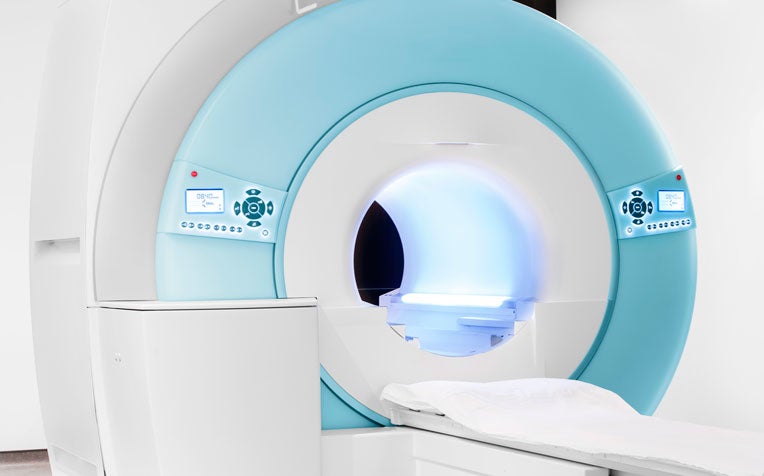
MRI scans help doctors capture high-resolution images of your internal structure.
What is an MRI scan?
Your doctor may request a magnetic resonance imaging (MRI) scan to detect or diagnose a range of medical conditions.
Unlike a computed tomography scan (CT scan) which uses ionising radiation, an MRI scan uses a magnetic field, radio waves and computer technology to capture high-resolution images of the body’s internal structure.
“An MRI scan is a safe and painless diagnostic imaging tool for capturing accurate and detailed images of body parts that sometimes cannot be seen by standard x-rays and CT scans” explains the Radiological Services team from Singapore General Hospital (SGH), a member of the SingHealth group.
What can an MRI scan detect?
Your doctor may order an MRI scan for the brain, spine, chest, heart and aorta, bones and joints, abdomen and pelvis.
An MRI scan can help to:
- Locate any tumour, infection or swelling in the brain and spinal cord.
- Check for cancerous or abnormal growths in internal organs, in the abdomen and pelvis such as the liver, pancreas, kidneys, prostate, uterus and ovaries.
- Visualise torn tendons and ligaments in joints, detect disc disorders such as herniated discs and bone tumours.
- Detect strokes and other vascular diseases of the brain such as aneurysms.
Watch this video to learn what to expect when going for an MRI scan.
What happens during an MRI scan?
You will lie still on a table that slides into the inside of an MRI machine.
During the scan, you will hear the scanner’s repetitive thumping sounds as radio waves are used to scan your body. The disposable earplugs provided can help to block out the noise.
In certain conditions, injection of a special dye into a vein in your arm may be required so that the organs may show up more clearly. Allergic reaction to the dye, i.e. Gadolinium, is rare.
Although the MRI machine may look intimidating, an MRI scan is a painless procedure. It may last 30 to 45 minutes, depending on the area being scanned.
Should you feel claustrophobic and uncomfortable at anytime during the scan, you can communicate with the radiographer through a call bell and an intercom system.
The MRI machine is able to generate cross-sectional and three-dimensional images from almost every angle. A diagnostic radiologist will analyse these images and send a report to your doctor.
How to prepare for an MRI scan?
Most MRI scans do not require you to fast and you may continue to take your medications.
However, you should inform the radiographer if you have any medical devices or metallic foreign objects in your body such as a pacemaker, cochlear implant, artificial heart valve, eye implant or foreign body, intra-uterine contraceptive device, artificial joint, or surgical clip. The MRI scanner’s magnet may interfere or interact with metallic devices.
In addition, make sure to inform your doctor if you are pregnant or suspect you may be pregnant. Depending on your specific situation, the doctor may recommend an alternative scanning method.
Keep these precautions in mind on the day of the scan:
- Remove any jewellery, hearing aids or anything metallic from your body
- Do not apply makeup or use hairspray.
- Remember to lie very still when told to do so. Any movement may result in blurry images.
Discover what really happens during an MRI scan by watching this first-hand, step-by-step guide from SingHealth that dispels common myths and shows you what to expect!
Ref: R14
Related articles:
MRI vs CT Scan: What are the differences?


Related Articles

Stay Healthy the Easy Way
Get trusted health advice, offers and more.

Follow HealthXchange

