






For mild sciatica pain relief, the following measures may help:
- Use over-the-counter pain relievers, heat, or cold packs to temporarily manage discomfort
- Avoid staying in the same position for long periods of time
- Maintain a healthy weight
- Lift objects properly and avoid bending at the waist
- Review your workstation setup to reduce strain on the lower back
- Stretch and exercise regularly to strengthen and improve flexibility — for example, swimming, brisk walking, or cycling
- Sleep on a firmer mattress if this improves comfort
Read on for more details about sciatica, including its causes, sciatica symptoms, and when to seek medical help.
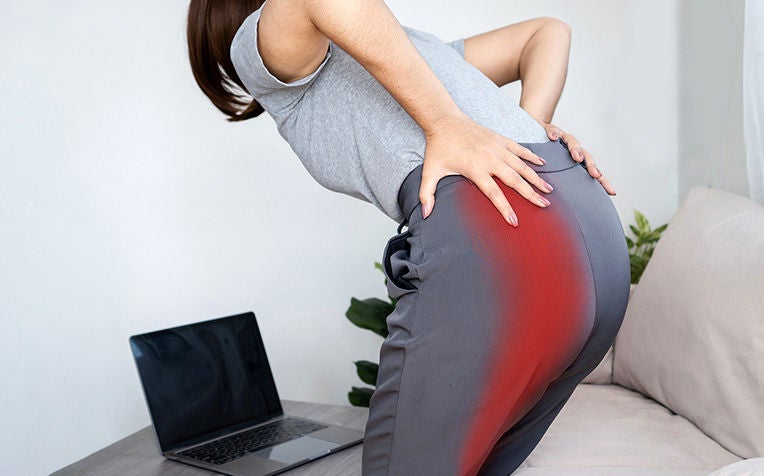
Sciatica is a nerve pain that starts from the lower back and radiates down the leg. It is often caused by a pinching of the sciatic nerve, the longest and thickest nerve in the body.
About 80 per cent of the adult population will experience lower back pain at some point in their lives.
Sciatica pain is a type of nerve pain that originates in the lower back and travels through the buttock and down the leg — sometimes extending all the way to the foot. It is caused by irritation or compression of the sciatic nerve, the longest and thickest nerve in the body.
While lower back pain is common, sciatica is specifically characterised by pain, tingling, numbness, or weakness that radiates along the path of the sciatic nerve.
If you are experiencing lower back pain radiating down the leg or lower back pain extending to the feet, it is worth understanding what may be causing it and how it can be managed.
Most cases of sciatic nerve pain improve with appropriate care and management. Read on to find out more about sciatica symptoms, causes, and treatment options.
What is the sciatic nerve?
The sciatic nerve is the longest nerve in the body. It runs from the lower back through the buttocks and down both legs to the feet.
When any part of this nerve is compressed or irritated, whether by a disc, bone spur, or other structural issue, it can cause symptoms ranging from mild discomfort to significant pain from the lower back to the leg.
What causes sciatica pain?
Sciatica most commonly occurs when the sciatic nerve is compressed by a nearby structure in the spine. Common causes include:
Herniated or slipped disc
When the cushioning disc between the vertebrae in the lower back ruptures or bulges, it may press against the sciatic nerve, causing irritation and inflammation.
This can result in pain from the lower back to the leg, numbness, and tingling that radiates into the buttock and leg.
Bone spurs
Bony growths on the vertebrae can narrow the spaces through which the sciatic nerve passes, compressing the nerve and causing similar sciatica symptoms.
In rare cases, other causes such as a tumour may be involved. A medical assessment is important to identify what causes sciatica accurately.
Sciatica vs lower back pain
Not all lower back pain is sciatica. General lower back pain tends to stay localised in the back, while sciatic nerve pain is characterised by symptoms, such as shooting pain, tingling, numbness, or weakness, that travel from the lower back or buttock into the leg or foot.
If your back pain does not extend into the leg and is not accompanied by nerve-related symptoms, it may be a different condition.
Read more about lower back pain treatment options for further guidance.
Sciatica symptoms: What does sciatica pain feel like?
Sciatica symptoms can vary in character and intensity. Common symptoms include:
- Shooting or radiating pain from the lower back or buttock into the leg or foot, a common form of lower back pain radiating down the leg
- Sharp or burning sensations along the nerve pathway
- Tingling or a pins-and-needles feeling down the leg, sometimes described as nerve pain
- Numbness in the leg or foot
- Muscle weakness affecting the leg or foot
- Pain that may worsen when coughing, sneezing, or sitting for prolonged periods
- Sudden shooting pain that makes standing up difficult
Symptoms typically affect one side of the body. The character and severity of sciatica pain can differ significantly between individuals.
How is sciatica diagnosed?
A doctor will typically begin with a physical examination, assessing muscle strength, reflexes, sensation, and range of movement to evaluate whether symptoms are consistent with sciatica.
Imaging such as an X-ray or MRI scan may be arranged in some cases — for example, if sciatica symptoms are severe, persistent, or if a specific underlying cause needs to be identified.
Imaging is not always required to begin managing symptoms and is typically considered based on individual clinical assessment.
How to manage and relieve sciatica pain?
“Most people will recover from short-term or acute sciatica with some bed rest, pain relief medications and gentle, stretching exercises.
Those with chronic sciatica will typically need a combination of pain relief medications, physiotherapy and exercise,” explains the Department of Neurosurgery at National Neuroscience Institute (NNI), a member of the SingHealth group.
Practical options for sciatica pain relief include:
Pain relief
Over-the-counter pain relievers, heat packs, or cold packs may help temporarily manage discomfort. Non-steroidal anti-inflammatory drugs (NSAIDs) such as ibuprofen or naproxen, as well as muscle relaxants, may be prescribed by a doctor where appropriate as part of sciatica treatment.
Staying active
Prolonged bed rest is generally not recommended for sciatica treatment. Keeping gently active, within comfortable limits, is often more beneficial than complete rest.
Avoid activities that significantly worsen sciatica pain, but try not to remain inactive for extended periods.
Physiotherapy and stretching
Physiotherapy, including targeted stretching and strengthening exercises for the spine and lower back, can form an important part of how to relieve sciatica pain.
A physiotherapist can guide appropriate sciatica exercises based on individual needs.
Unsure what exercises to do to relieve lower back pain? Check out these two videos by Senior Physiotherapist Dr June Tan from Singapore General Hospital (SGH).
Posture and positioning
Avoid staying in the same position for long periods. Changing position regularly and maintaining good posture during daily activities may help reduce strain on the sciatic nerve.
Can exercise help with sciatica?
Appropriate movement and sciatica exercises can play a useful role in managing symptoms and supporting recovery. Gentle activities such as walking, swimming, or cycling are generally well tolerated and may help maintain mobility without placing excessive strain on the lower back.
However, exercise should be modified based on how symptoms respond. Avoid pushing through exercises that significantly worsen sciatic nerve pain or cause increased numbness or weakness.
A physiotherapist can advise on suitable sciatica exercises based on individual symptoms and underlying cause.
Medical treatment and surgery
Where conservative management is not sufficient, a doctor may recommend additional sciatica treatment options including prescription medication or further intervention.
Spinal surgery may be considered in selected cases, for example, when sciatica causes significant or progressive leg weakness, loss of sensation, or loss of bowel or bladder control, or when symptoms have not responded to non-surgical treatment over an appropriate period of time.
Surgery is not a standard first-line sciatica treatment for most people and is typically considered after other options have been explored. Where relevant, surgical options may be explored, depending on the recommendation of your healthcare provider.
Watch this video to learn about TLIF (Transforaminal Lumbar Interbody Fusion) surgery for treating severe lower back pain and leg numbness.
How long does sciatica last?
How long does sciatica last varies depending on the underlying cause, severity of nerve involvement, and the individual.
Many people with acute sciatica see improvement within several weeks with appropriate management. However, some cases may take longer, and sciatica symptoms can recur in certain individuals.
There is no single recovery timeframe that applies to everyone.
Persistent, worsening, or recurring sciatic nerve pain should be reviewed by a healthcare professional rather than managed at home indefinitely.
When to see a doctor for sciatica
Seek immediate medical attention if sciatica pain is accompanied by any of the following:
- New difficulty controlling the bladder or bowel, or loss of bladder or bowel function
- Back pain following a fall or injury
- Significant or rapidly worsening leg weakness or numbness
- Loss of normal function such as unsteady walking or worsening balance
- Unexplained weight loss, fever, or night sweats
- Sciatica pain that does not improve despite rest and pain relief medication
- Persistent pain from an injury
Do not delay seeking medical assessment if any of these symptoms are present.
How to reduce risk of sciatica returning
While sciatica cannot always be prevented from recurring, the following habits may help reduce the risk and support long-term back health:
- Stay active and avoid prolonged sitting where possible
- Take regular movement breaks throughout the day
- Maintain good posture when sitting, standing, and lifting
- Lift objects correctly — bend at the knees rather than the waist
- Maintain a healthy body weight
- Review your workstation setup — good office ergonomics can help reduce unnecessary strain on the lower back during prolonged sitting
- Follow any physiotherapy advice or sciatica exercises recommended by your healthcare team
- Make stretching a regular part of your daily routine
Managing your back health
Sciatica pain, characterised by lower back pain extending to the feet or down the leg, is a condition that many people experience at some point.
Many cases improve with appropriate sciatica treatment, gradual return to activity, and lifestyle adjustments.
However, persistent, worsening, or concerning sciatica symptoms, particularly those affecting bladder or bowel function or causing significant weakness, should always be assessed by a healthcare professional.
Ref: F26 (seo)
Related articles:
10 Tips for a Healthy Back
Ankylosing Spondylitis (Spine Inflammation): Causes, Symptoms, Treatment


Related Articles


Stay Healthy the Easy Way
Get trusted health advice, offers and more.

Follow HealthXchange

