





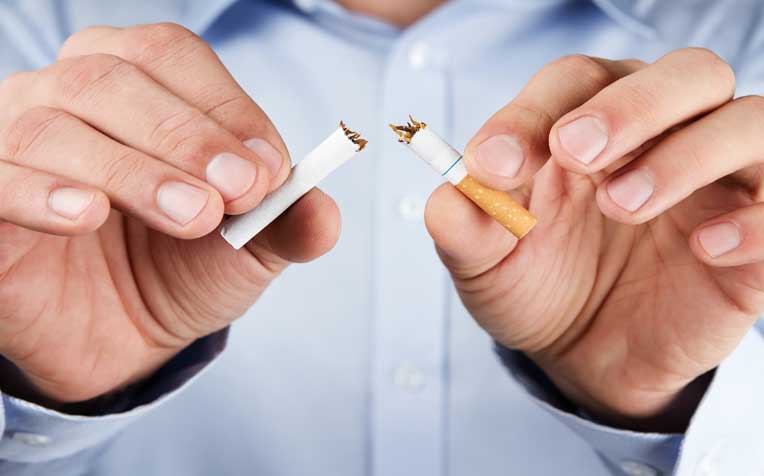
Withdrawal symptoms and side effects are common after quitting smoking, but make healthier lifestyle choices and don't give up.
Health risks associated with smoking
Every cigarette takes seven minutes off a smoker’s life. On average, smokers die 10 years earlier than non-smokers.
Smoking increases disease risks and causes serious complications for those with chronic medical conditions.
More than 2,500 Singaporeans die each year from smoking-related illnesses. Patients who have chronic medical conditions such as diabetes, hypertension, lipid disorders, stroke, asthma and COPD (chronic obstructive pulmonary disease), and who smoke, have a much greater risk of developing disease-related complications, greatly reducing their quality of life and causing premature death.
Higher risk of diseases
Lung cancer
- 90 per cent of all lung cancer cases in Singaporean males occur among smokers.
- Smokers are 20 times more likely to develop lung cancer.
Chronic obstructive pulmonary disease (COPD)
- COPD is the 7th highest cause of death in Singapore.
- This disease is mostly caused by smoking, which narrows the airways and destroys the air sacs in the lungs, resulting in breathing difficulty.
- Approximately 80-90 per cent of COPD deaths are caused by smoking.
Heart disease and stroke
- Smoking causes fatty deposits to build up in the blood vessels.
- About 40 per cent of deaths due to heart disease before the age of 65 are related to smoking.
- Smokers have more than four times the risk of having a stroke as compared with people who have never smoked.
Cancers
- Smokers risk developing cancer of the mouth, throat, larynx, pharynx, oesophagus, stomach, pancreas, kidney and bladder.
Other diseases
- Smokers have a 40 per cent higher risk of developing cataracts, which are caused by cigarette smoke irritation to the eyes or chemicals released into the lungs that get into the eyes through the bloodstream.
- Smokers are also more prone to tooth decay and gum disease due to excessive formation of plaque.
How smoking affects chronic medical conditions
| Condition Type | Effects |
|---|---|
| Diabetes | Aggravates complications such as heart disease, kidney disease, foot disorders, retina disorders and neuropathy. |
| Hypertension | Increase the risk of stroke and heart disease. |
| Lipid disorders |
|
| Stroke | Increases the risk of transient ischaemic attacks or another stroke. |
| COPD | Increases the risk of COPD, a lung disease that make difficult to breathe. |
| Asthma |
|
Quitting smoking is hard, but your body will start to reap the benefits within 24 hours
Thanks to the many years of public education, we all know the ill effects of smoking as well as the numerous statistics available regarding its impact on various illnesses. But why then do we still smoke? Why do we persist in doing something that we know is harmful for us and those around us?
Mark Twain once said, “It is easy to quit smoking. I’ve done it hundreds of times.” The truth of the matter is that quitting for good is not easy at all. Ask smokers and their loved ones.
"Nicotine is very addictive, even more addictive than drugs. It has a physiological, behavioural and psychological hold on you," says Ms Evelyn Boon, Senior Principal Psychologist, from the Department of Psychiatry at Singapore General Hospital (SGH), a member of the SingHealth group. There are physical signs of nicotine dependency like withdrawal symptoms for some smokers (in particular moderate to heavy smokers).
Some people smoke because they use smoking as an emotional crutch – they smoke when they are stressed, upset or angry. Yet there are others who smoke simply as a habit or routine, either after meals or after going to the toilet in the morning.
Quitting smoking does sound very daunting, doesn’t it? The reality is that it is possible to quit, and it is never too late to do so even if you have been smoking for a very long time. Within 24 hours of quitting, your body will start to reap the benefits. You will breathe better; your sense of smell and taste will improve. Contrary to what old wives’ tales say, you will not be worse off if you quit smoking!
However, you will experience, during the first two weeks at least, some withdrawal symptoms. This is natural as your body is adapting to a non-smoking condition. But don’t give up.
Quitting smoking: withdrawal symptoms and side effects
Here are some withdrawal symptoms and side effects to watch out for:
- Physical withdrawal symptoms – coughing, flu-like symptoms, constipation, headaches
- Psychological withdrawal symptoms – mood swings, increased irritability, low mood
- Potential weight gain – be wary of food cravings. You might eat more as your taste buds improve and food tastes better. Take healthier snacks or fruits instead, and drink plenty of water. Start exercising as well; this will help you cope.
Tips to help you quit smoking:
- Identify what sort of smoker you are – habitual/behavioural, psychological, physical. This will help you choose aids like nicotine patches (if your addiction is physical and if you are a heavy smoker), gum/lozenges, etc.
- If you are a behavioural smoker who likes the hand-to-mouth action, perhaps a nicotine inhaler might be best for you.
- Set a quit date (choose a date that is important to you or easy to remember, e.g. 1st March).
- You could choose the decreasing method or go cold turkey (stop at once).
- Do NOT buy more than one packet of cigarettes to “stand by” at home or at work.
- On your quit date, clear your home of ashtrays and other smoking paraphernalia, like lighters.
- Start a piggy bank – “fine” yourself $10 (the estimated price of a pack of cigarettes) and put the money in the piggy bank each day, or each time, you smoke. If you have not smoked for a whole month, you can use the money to reward yourself!
Family members can help too, by:
- Being aware of the withdrawal symptoms, especially the crankiness!
- Be understanding and help by stocking up on fruits and healthy snacks.
- If another family member is a smoker, you can help each other by quitting together.
- If another family member is a smoker, they can refrain from smoking in your presence. This will help them too.
There are now many options for you to quit smoking. You can call the Health Promotion Board’s Quit Smoking helpline (1-800-438-2000) to speak to a Quit Advisor. Or get the “I Quit” mobile app. You can also seek professional counselling (Smoking Cessation Clinics, see below)) and use pharmacological aids (nicotine replacement therapy in the form of patches, gum, lozenges).
Smoking is a hard habit to kick! So good luck and don’t give up!
The Smoking Cessation Programme offered by the Department of Respiratory and Critical Care Medicine, Singapore General Hospital (SGH), a member of the SingHealth group, aims to help smokers to stop smoking and lead a new, healthier smoke-free life. Call 6321 4377.
Benefits of quitting smoking
Health benefits:
- Lower risks of smoking-related diseases.
- Improved stamina and endurance.
- Sperm quality and fertility level return to normal.
- Less coughing and respiratory illness.
Physical benefits:
- Fresher breath and whiter teeth.
- Better skin texture and elasticity.
Emotional benefits:
- Improved sense of well-being.
- Increased self-confidence and sense of control of life.
- Sense of accomplishment and pride in being able to stop smoking.
- Improved relationship with loved ones.
Social benefits:
- Better concentration and higher productivity at the workplace as you will not be distracted by the urge to smoke and the need to take smoke breaks.
- This also equates to more time for work, family and friends.
- You no longer face restrictions at public places such as restaurants with non-smoking policies.
- Wider circle of friends as 87 per cent of Singaporeans are non-smokers.
Financial benefits:
- Savings from not having to buy cigarettes, e.g. a person who smokes 20 cigarettes a day can save $133 a week or $6,916 a year!
- You no longer have to pay higher insurance premiums that smokers are subjected to.
- You can save on medical costs of smoking-related illnesses.
For a helping hand, call QuitLine: 1800 438 2000, Health Promotion Board (HPB)
Ref: F26
Contributed by

Related Articles



Stay Healthy the Easy Way
Get trusted health advice, offers and more.

Follow HealthXchange

