





If you suspect you are having a heart attack and you have no one with you, act immediately.
Here's what to do:
- Call 995 immediately if you are in Singapore
- Stop what you are doing and move to a safe place to rest
- If you are driving, pull over safely before calling for help
- Sit or lie down in the most comfortable position
- Take aspirin only if you have it on hand, are not allergic, and have not been advised by a doctor to avoid it
- Unlock your door if possible, so emergency responders can reach you
- Keep your phone nearby and stay on the line if instructed by the operator
What not to do:
- Do not cough repeatedly or apply pressure to your chest
- Do not eat or drink anything
- Do not attempt to drive yourself to the hospital
Read on for a more detailed guide on how to survive a heart attack when alone and the heart attack emergency steps you should take — and avoid — in the critical minutes before help arrives.
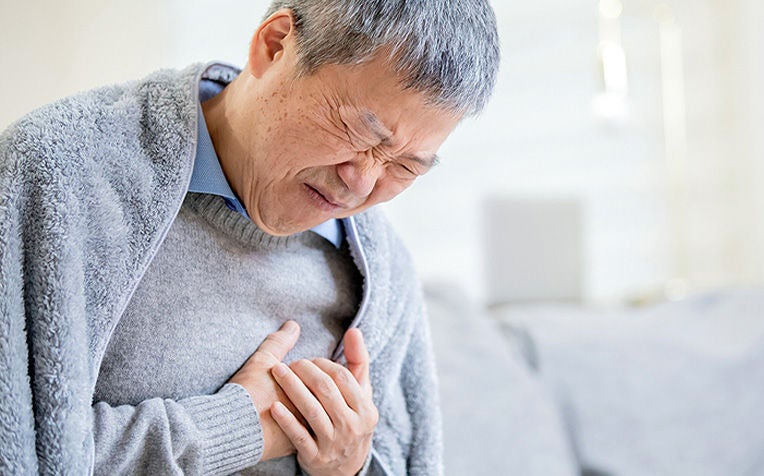
A heart attack can happen at any time. What to do if you're alone? First, call for emergency medical help!
If you were to suffer a heart attack while in the company of people, calling out for help is probably the first instinctive thing you'd do.
But, what should you do when a heart attack strikes and you have no one around? Can you survive it? Here’s what to do during a heart attack when alone.
Call 995 immediately
During a heart attack emergency in Singapore, calling 995 is the first and most important step you can take.
Calling a relative first, searching online, or waiting to see if symptoms improve is not an advisable first step. You need specialised treatment to be delivered to you as quickly as possible in order to save your heart muscle.
When you call, tell the dispatcher your symptoms and your exact location. Do not hang up unless instructed to do so.
Clinical Associate Professor Chin Chee Tang, Senior Consultant, Department of Cardiology, National Heart Centre Singapore (NHCS), a member of the SingHealth group, shared his advice on what to do if you have a heart attack alone.
“Should you be alone when a heart attack occurs, stop whatever you’re doing, proceed to a safe place to rest and call for medical help. For example, if you’re driving, first pull to the side of the road and call for aid,” he said.
What to do while waiting for medical help
While waiting for emergency medical help to arrive, you should:
- Unlock your front door if you can do so safely, so emergency responders can reach you without delay.
- Rest in a safe position, if possible, near the entrance. Sit or lie down, whichever feels most comfortable.
- Avoid stairs or unnecessary movement — conserve your energy and stay as still as possible.
- Loosen tight clothing, if needed, around your chest, neck, or waist to make breathing easier.
- Keep your phone within reach and stay on the line with the dispatcher if instructed.
- Prepare a list of your medications, allergies, or medical conditions if it is easily accessible. Doing so will help the paramedics when they arrive.
- Contact a nearby family member, neighbour, or security guard only after calling 995, or if the dispatcher advises you to do so
Take an aspirin (if you are not allergic to it)
Aspirin is the most commonly taken blood thinning medication in the world, which will improve your chances of survival when taken during a heart attack.
Most cases of heart attack are caused by a blood clot forming in one of the blood vessels responsible for supplying blood to the heart.
The resulting blockage deprives the heart of oxygen-rich blood, causing damage to the heart muscle, which progressively dies. Taking an aspirin during a heart attack may help as it prevents the clot from getting bigger, giving the body a chance to break down the blood clot.
However, only take it if you have it at home, and you know that you are not allergic to it. Additionally, do not take aspirin as a substitute for calling 995.
Heart attack first aid always starts with getting emergency help.
Lie down and stay calm
Don't panic! Stay calm, lie down and rest while waiting for help.
What not to do during a heart attack
When it comes to heart attack myths, misinformation can be dangerous. Here is what you should avoid:
Do not rely on just taking nitroglycerin
Taking a prescribed medication such as nitroglycerin that temporarily widens blood vessels to improve blood supply to the heart is unlikely to stop a heart attack. You still need to call for help.
Assoc Prof Chin says, “Nitroglycerin has not been shown to prevent heart attacks or improve survival substantially during an attack. It is more useful for patients with angina, an altogether different condition where patients experience chest pain or discomfort when exerting themselves.”
Angina results from an imbalance in the supply and demand for blood to the heart, but it is due to a narrowed blood vessel and not to a clot that needs to be broken down.
Taking nitroglycerin during such a situation may temporarily expand the narrowed blood vessel and relieve discomfort.
Do not cough repeatedly
You may have seen advice online suggesting that coughing repeatedly during a heart attack can help, this is a common misconception. “Cough CPR” is not a recognised treatment for heart attacks.
For self-administered “treatments” such as coughing repeatedly, Assoc Prof Chin cautions that these are probably just urban legends.
He explains, “In rare cases where the heart beat is very slow from an abnormal reflex mechanism, coughing may help restore normal heart rhythm – but this is not what happens in a heart attack.”
Do not apply pressure on the chest
Similar to coughing repeatedly will not help during a heart attack, applying pressure on the chest area during a heart attack is unlikely to help too, unless the person’s heart has stopped beating (also known as a cardiac arrest).
When a cardiac arrest happens, CPR (cardiopulmonary resuscitation) should be administered – ideally by someone who is trained to do so. “Even if a person is qualified to give CPR, he or she should call for help and notify the emergency medical services before administering aid,” says Assoc Prof Chin.
Heart attack symptoms
Recognising heart attack warning signs early can be life-saving. “About 90 per cent of heart attack sufferers experience classical symptoms,” says Assoc Prof Chin.
To know for sure if you’re suffering from a heart attack, you first need to be able to identify its symptoms. Classical symptoms include:
Severe heart attack chest pain (like squeezing, or a heaviness, or pressing) at the central or left part of the chest, lasting usually for at least 20 min.
Pain that radiates to the left upper arm, neck or jaw.
Profuse sweating and a feeling of impending doom.
However, the elderly, females and those suffering from diabetes may develop non-classical heart attack symptoms. These include:
- Shortness of breath
- Mild chest pain
- Nausea, vomiting
- Pain in the epigastric region (upper central portion of the abdomen)
Heart attack vs cardiac arrest
A heart attack and a sudden cardiac arrest are not the same emergency, even though the terms are often confused.
| Heart Attack (Myocardial Infarction) | Cardiac Arrest |
|---|---|
| Blood flow to the heart is blocked. The heart is usually still beating. | The heart suddenly stops pumping effectively. |
| The person is often awake and responsive. | The person is unresponsive and not breathing normally. |
| Needs urgent medical treatment. | Needs immediate CPR and AED use. |
| CPR/AED are not usually used for a conscious person. | CPR/AED are critical to improve survival. |
After a heart attack: Reducing future risk
Reducing the risk of another attack requires long-term commitment to your health. Here are some things to keep in mind to reduce heart attack risk after discharge:
- Follow your doctor's advice and attend all follow-up appointments without skipping.
- Take prescribed medication as directed. Do not stop or adjust dosage without consulting your doctor.
- Manage underlying conditions such as high blood pressure, high cholesterol, and diabetes, as these are key risk factors for a repeat heart attack.
- Stop smoking. Smoking significantly increases the risk of another cardiac event.
- Follow a heart-healthy diet and activity plan as recommended by your doctor or care team.
- Know your warning signs. Be familiar with the symptoms of a heart attack so you can act faster if it happens again.
For personalised advice on heart attack prevention and lifestyle changes after a heart attack, speak with your doctor or care team at your next follow-up appointment.
FAQs
1. What should I do first if I think I am having a heart attack while alone?
Immediately call 995 for a heart attack emergency in Singapore. Stop what you are doing, rest in a safe place, and follow the dispatcher’s instructions.
2. During a heart attack, would it make a difference to lie down, sit upright or stand up?
It is unlikely to make a big difference. Assoc Prof Chin says," Most people will be feeling very uncomfortable and will tend to want to lie down. In some people, they may be feeling very breathless and hence want to sit upright. I would suggest allowing the person to get into the position that he/she is most comfortable in."
3. Will drinking water or eating something during a heart attack help?
It will not help the sufferer. Most people who are having a heart attack will not be hungry or want to eat food. Eating and drinking during a heart attack is discouraged as much as possible because heart attack sufferers have a high chance of vomiting and hence may choke or aspirate on their vomit.
4. Should I take aspirin during a heart attack?
Only consider aspirin if you have it, are not allergic, and have not been told by a doctor to avoid it. Do not delay calling 995 to look for aspirin.
5. Can coughing repeatedly stop a heart attack?
Do not rely on cough CPR for heart attacks. Call emergency help immediately.
6. Can I drive myself to hospital during a heart attack?
No. If symptoms occur while driving, pull over safely and call for help.
7. Will using an AED during a heart attack help? In what scenarios should CPR and an AED be used?
An AED (automated external defibrillator), as with CPR, must only be used when a person has a cardiac arrest.
An AED must never be used If the patient's heart is still pumping during a heart attack as delivering an electric shock to the heart in this situation may actually cause the heart to stop pumping.
8. What are heart attack symptoms in women?
Women’s heart attack symptoms may differ from men. Women may have chest pain, but they may also experience shortness of breath, cold sweat, nausea, vomiting, or pain in the back, neck, jaw, arm or stomach.
9. Can heart attack symptoms come and go?
Yes, symptoms may come and go. Do not wait for symptoms to become severe before calling for help.
10. What is the survival rate for heart attacks in Singapore?
In the latest report from the Singapore Myocardial Infarction Registry, about 92% of patients in 2018 survived for more than 30 days after their heart attack. This is a significant improvement as compared to the survival rate in 2009.
Know the signs and act fast
A heart attack is a medical emergency.
Knowing this heart disease’s warning signs and acting on them immediately — starting with calling 995 — can save heart muscle and lives. Do not rely on unproven self-treatment methods.
When in doubt, call for help.
Ref: K21 (seo)
Related articles:
Tips for a Healthy Heart
Sudden Chest Pains You Shouldn't Ignore


Stay Healthy the Easy Way
Get trusted health advice, offers and more.

Get the Health Buddy App


Follow HealthXchange

