






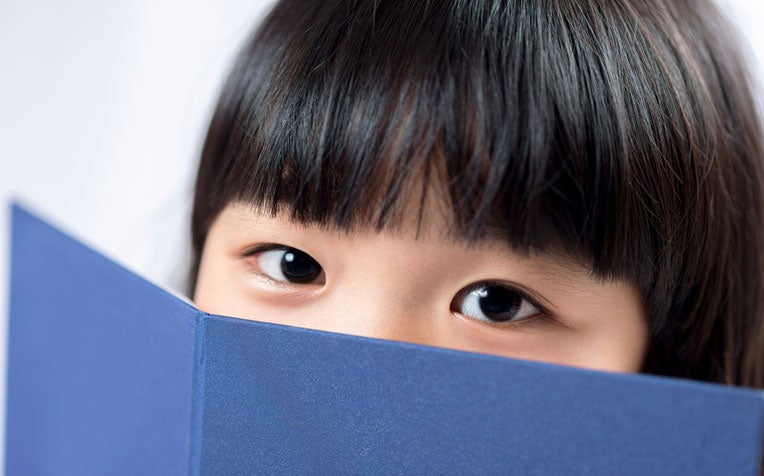
Children may suffer from eye conditions at young ages. Early detection is necessary for healthy eyes.
Vision plays an important role in a child’s physical, cognitive, and social development
Uncorrected vision problems can impair a child’s learning and development and may even lead to permanent vision loss in some cases. Childhood vision disorders may continue to affect a person’s health and well-being throughout the adult years, hence early detection and treatment are important.
The Paediatric Ophthalmology & Adult Strabismus Department at Singapore National Eye Centre (SNEC), a member of the SingHealth group, sees and manages these common paediatric eye conditions:
1. Childhood myopia
Childhood myopia, also known as short-sightedness or near-sightedness, is the condition of the eye when distance vision is more blurred, compared with near vision.
It tends to increase rapidly between 5 and 15 years old, and usually stabilises by the early twenties.
Singapore is often referred to as the Myopia Capital of the World. We have a high prevalence of myopia, with 65% of our children becoming myopic by the time they reach Primary 6.
The earlier a child gets myopia, the more likely he or she will get high myopia as an adult. Risks of high myopia include:
Therefore, prevention of myopia and delaying its progression early in life are important steps in management of myopia. Although there is currently no cure for myopia, we can try to retard its progression.
Other than environmental modification, we may prescribe atropine eye drops of varying concentrations to suitable patients to prevent the progression of myopia.
How to prevent and manage childhood myopia
- Reduce near work and spend more time outdoors, at least 2 hours daily.
- Practice the 20–20–20 rule: for every 20 minutes of near-work, look at something 20 feet (6 metres) away for at least 20 seconds or more.
- Increase indoor lighting and sit at least 50cm away from screens and near work.
- If myopia has been established, various treatments are available to slow down the progression, including: Atropine eye drops, Specialised spectacles and contact lenses.
When to see a doctor for childhood myopia
Parents should send their child to check for myopia if they exhibit symptoms such as:
- Squinting or holding objects close to their face when doing homework, reading or watching TV.
- Frequently rubbing and/or blinking their eyes.
- Having an abnormal head posture such as frequent head tilting.
- Being unable to see the whiteboard at school
2. Amblyopia (lazy eye)
Amblyopia, also known as lazy eye, occurs when one or both eyes do not develop normal vision due to various factors that cause the visual part of the brain to function abnormally.
This weakens the eye and if uncorrected, can lead to long-term vision problems.
Amblyopia cannot be strictly prevented, but early detection through regular eye checks can be managed well. If recognised early, amblyopia generally responds well to treatment.
How to prevent and manage amblyopia
- Correct and treat underlying conditions, including severe refractive errors such as nearsightedness, farsightedness or misaligned eyes (strabismus).
- If diagnosed with amblyopia, it can be treated with glasses, patching, eye drops, and sometimes surgery.
When to see a doctor for amblyopia
Parents should send their child to check for amblyopia if they notice their child's:
- Eyes wandering or crossing inwards or outwards, or the eyes do not appear to move together.
- Squinting or tilting of the head to focus on toys, books or screens.
3. Strabismus (squint)
Strabismus, also known as squint, is a condition where the eyes are misaligned.
While one eye looks straight ahead, the squinting eye may be turned inward, outward, upward, or downward. It may be noticeable all the time, or it may come and go. It may be present at birth or appear later.
Strabismus in childhood can result in amblyopia and cause permanent loss of vision if treatment is delayed.
Adults and older children may experience diplopia (double vision) as a result of the strabismus.
How to prevent and manage strabismus
- Frequent eye checks and early detection can help to manage the condition and preserve vision.
- Depending on the type of strabismus, treatment may include glasses, patching therapy, orthoptics (eye exercises), prisms, Botox injection or surgery.
When to see a doctor for strabismus
- Strabismus appears in infants and young children; parents should send their young children for frequent eye checks during their first 3 years.
They should also see a doctor if their child exhibits symptoms such as:
- Squinting or head tilting.
- Having misaligned eyes, where the eyes do not line up in the same direction inwards or outwards.
4. Childhood tearing (epiphora)
Epiphora is a term for excessive tearing. Childhood epiphora is often noted soon after birth but can be acquired later.
When noted during infancy, it is usually due to blockage of the tear drainage system which would usually improve spontaneously by 12 months of age.
Tear duct blockage can be congenital or occur due to other factors such as infections, injuries or growths.
Other less common but important causes of tearing include paediatric glaucoma and ocular surface disease.
How to prevent and manage tearing
- Maintain good eye hygiene, wash your child’s eyelids and lashes to stop blockages and inflammations.
- Avoid irritants and allergy triggers such as smoke, dust, pollen or chemical fumes, wear protective eyewear outside.
- Medical treatment for blocked tear ducts include; tear sac massage and eye drops, but if tearing persists, or if frequent infection becomes a problem, surgical probing of the tear drainage system may be necessary.
- If tearing is due to allergies or infections, medications such as artificial tears or prescription eye drops can be prescribed.
When to see a doctor for tearing
Parents should send their child for an eye exam if they exhibit:
- Excessive and continuous tearing.
- Eye pain and swelling.
- Frequent rubbing and/or blinking their eyes.
- Vision is affected by watery eyes.
5. Retinopathy of prematurity (ROP)
Retinopathy of prematurity (ROP) is an eye disease caused by abnormal development of retinal blood vessels in premature infants.
Most ROP resolves spontaneously without causing damage to the retina, but some may progress to develop severe changes in the retina that require treatment.
Depending on the severity, treatment may include laser treatment, injection of medicine into the eye, or surgery.
How to prevent and manage ROP
Children should undergo frequent eye exams starting 4 to 6 weeks after birth, especially premature babies born before 32 weeks or weighing under 1500 grams.
6. Paediatric cataract
Cataract is an opacification of the normally clear crystalline lens of the eye. Depending on the size and location, the cataract can interfere with light entry into the eye and onto the retina causing blurring of vision.
Cataracts are typically associated with older adults but can also occur in childhood.
In childhood cataract, early detection and treatment of cataracts are critical in infants and young children in order to restore normal visual development. If severe, surgery may be needed to remove the cataract.
How to prevent and manage paediatric cataract
- Early screening of newborns.
- Observation and surgical intervention depending on the cataract’s severity.
- Long term monitoring or a child’s eye health.
Ref: F26
Related articles:
Children's Eye Problems: Early Signs and What to Do
Want to Prevent Myopia in Your Child? Get Your Child to Do This!
Lazy Eye in Children (Amblyopia): Early Signs and How to Treat


Stay Healthy the Easy Way
Get trusted health advice, offers and more.

Follow HealthXchange

